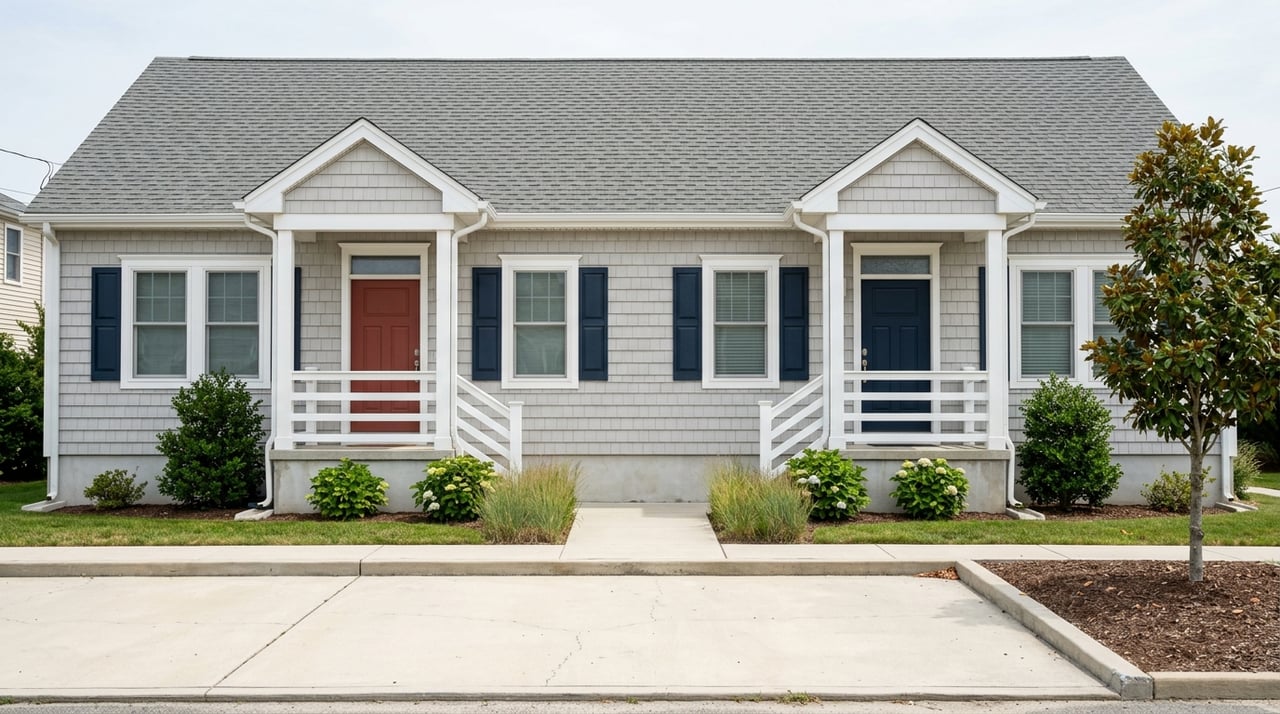
Small Investor’s Guide To Rental Property In Salisbury
May 7, 2026
May 7, 2026
Thinking about buying a rental property in Salisbury? You are not alone. For many small investors, Salisbury stands out as a more affordable way to enter the Delmarva market without taking on beach-town pricing. The opportunity is real, but so is the need for careful math, local rule awareness, and a realistic plan for year-round demand. This guide will help you understand what rents look like, what drives occupancy, and where small investors need to be especially careful. Let’s dive in.
Salisbury can look appealing if you want a lower purchase price than nearby coastal markets. Zillow’s May 2026 data puts Salisbury’s average home value at about $264,545, while West Ocean City is about $498,738 and Boardwalk/Inlet is about $480,618. If beach-area prices feel out of reach, Salisbury may offer a lower-basis option while keeping you in the same broader regional market.
That said, lower prices do not automatically mean easy cash flow. Salisbury’s rent ceiling is also lower than many buyers expect, and city properties come with licensing, inspections, and property tax considerations that can affect returns. For small investors, the best strategy is usually steady underwriting for year-round renters, not a gamble on seasonal upside.
Rental data in Salisbury falls into a range, not one perfect number. The most recent ACS profiles show median gross rent at $1,318 in Salisbury and $1,327 in Wicomico County. Zillow’s May 2026 asking-rent tracker shows a higher citywide average asking rent of $1,650.
These numbers are both useful, but they measure different things. ACS reflects occupied units, while Zillow tracks active asking rents. That means you should treat them as a band of reference points instead of interchangeable figures.
For apartment-style properties, Zillow’s May 2026 figures show average asking rents of:
Apartments.com reported similar but slightly lower local apartment data in April 2026, with apartments averaging $1,296, townhomes $1,970, and houses $2,079. For a small investor, the takeaway is simple: you need to underwrite to the actual property type, size, and location, not a citywide average.
Salisbury has more than one renter pool, which matters if you want consistency. Salisbury University reported total enrollment of 7,025 for the 2024-25 academic year, including 6,288 undergraduates and 737 graduate students. The university also runs four academic terms each year: fall, winter, spring, and summer.
That school calendar can shape leasing activity. Major move-in periods cluster in late August and late January, with summer move-ins in June and July. Salisbury University also maintains an off-campus housing service, a housing fair, and a marketplace for students searching for rentals, which likely concentrates student-related turnover into those windows.
At the same time, Salisbury is not only a student market. TidalHealth Peninsula Regional operates 24/7 and reported 476 acute beds, 648,846 outpatient visits, and 118,917 emergency-department visits in FY2025. That supports a broader year-round housing base tied to healthcare and related employment, which can help reduce dependence on one tenant segment.
Vacancy rates suggest the rental market is not loose. ACS data shows Salisbury city with a rental vacancy rate of 3.3%, while Wicomico County sits at 4.7%. In practical terms, that points to relatively tight rental conditions, especially inside the city.
A tight market can support occupancy, but it should not make you careless. Even in a stronger rental environment, your actual result depends on price point, condition, lease timing, and how well the property matches the renters you want to attract. A unit that is overpriced or poorly timed can still sit.
If your property is inside Salisbury city limits, local compliance matters right away. The city requires a Rental Owner’s License before you can register units, and each rental unit must be registered under that license. A new license costs $120, annual renewal is $75, and new units must be inspected before approval.
Existing units may be inspected at renewal or after a complaint. If the property was built before 1978, lead certificates are required. The city’s renewal cycle runs on a March 1 deadline, so this is not something you want to learn after closing.
There is also a city 4-to-2 occupancy rule in certain residential zones. That can affect student-share or roommate-heavy rental plans. If you are looking at a property with a multiple-tenant layout in mind, you need to confirm how the rule applies to that specific address before you buy.
One of the biggest mistakes small investors make is comparing two homes with similar rents and assuming they will perform the same. In Salisbury, the address itself can change the numbers because city properties carry additional municipal tax load on top of county and state rates.
For FY2026, Salisbury’s municipal real-property tax rate is $1.0332 per $100 of assessed value. Wicomico County’s rate is $0.8099 per $100, and the Maryland state rate listed in the city’s fair-housing analysis is $0.1120 per $100. That creates a rough combined rate of about $1.9551 per $100 of assessed value for a city property.
Maryland also bases property tax bills on assessment plus state, county, and municipal rates, with bills issued each July or August for the fiscal year beginning July 1. Assessments are phased in over three years. For an investor, that means the tax line on your spreadsheet deserves more attention than many first-time buyers give it.
Before you fall in love with a property, run a basic screen. A simple formula is gross rent minus vacancy reserve, property taxes, insurance, repairs and maintenance, management, and mortgage principal and interest. This is only a first-pass test, but it can quickly tell you whether a deal deserves a closer look.
Freddie Mac’s April 30, 2026 PMMS put the 30-year fixed rate at 6.30%. On a $150,000 purchase with 20% down, the monthly principal-and-interest payment is about $743. Using the rough combined city tax load above, annual taxes come to about $2,933, or roughly $244 per month.
If that same property rents for $1,500 and you reserve 5% for vacancy, 8% for management, plus $120 per month for insurance and $150 per month for routine maintenance, the leftover is about $48 per month before capital expenditures and surprise repairs. That is a very thin margin.
This example matters because it shows how quickly a deal can tighten up. A property can look affordable at first glance and still leave almost no cushion once you account for the real carrying costs. For a small investor, buying well often matters more than anything you do after closing.
At Salisbury’s average home value of about $264,545, the math gets much harder on a conventional loan. Using the same lender-rate assumptions from the research, principal and interest would be near $1,310 per month. Property taxes would be around $431 per month before insurance or repairs.
That is already above the citywide average asking rent of $1,650, and you have not yet added vacancy, management, maintenance, or other ownership costs. This is why many average-priced deals do not pencil well unless you have a lower purchase price, stronger-than-average rents, or a larger down payment.
The lesson is not that Salisbury cannot work. It can. The lesson is that margin is usually tighter than buyers expect, so disciplined underwriting is not optional.
For many investors, the strongest Salisbury plan is boring in the best way. You look for an entry price that leaves room for taxes, maintenance, and professional management, then target a year-round renter base instead of trying to force a beach-market strategy into a different city. Stability often beats speculation.
It also helps to think about leasing timing before you close. If your property may appeal to students, late summer and late winter can be especially important because of Salisbury University’s move-in cycles. If your property is better suited to healthcare or other year-round renters, your focus may be less seasonal and more about condition, convenience, and realistic pricing.
A small rental property is easier to evaluate when you have the right people around you. In Salisbury, that often means a lender who can run accurate payment scenarios, a property manager who understands the local rental cycle, and a tax professional who can review the address-specific carrying costs. That team can help you test your assumptions before you commit.
If you are buying from out of town or balancing Delmarva options, local guidance matters even more. Salisbury can be a practical alternative to pricier coastal markets, but the best opportunities usually come from careful analysis, not broad averages.
If you want help comparing Salisbury with nearby Delmarva opportunities, working through the numbers, or planning for property management after closing, Nicole Rayne can help you take the next step with local, full-service guidance.
Stay up to date on the latest real estate trends.

Whether you're buying your first home, searching for a vacation retreat, or looking to invest along the coast, she provides expert guidance every step of the way.

6200 COASTAL HWY STE 101 OCEAN CITY MD 21842